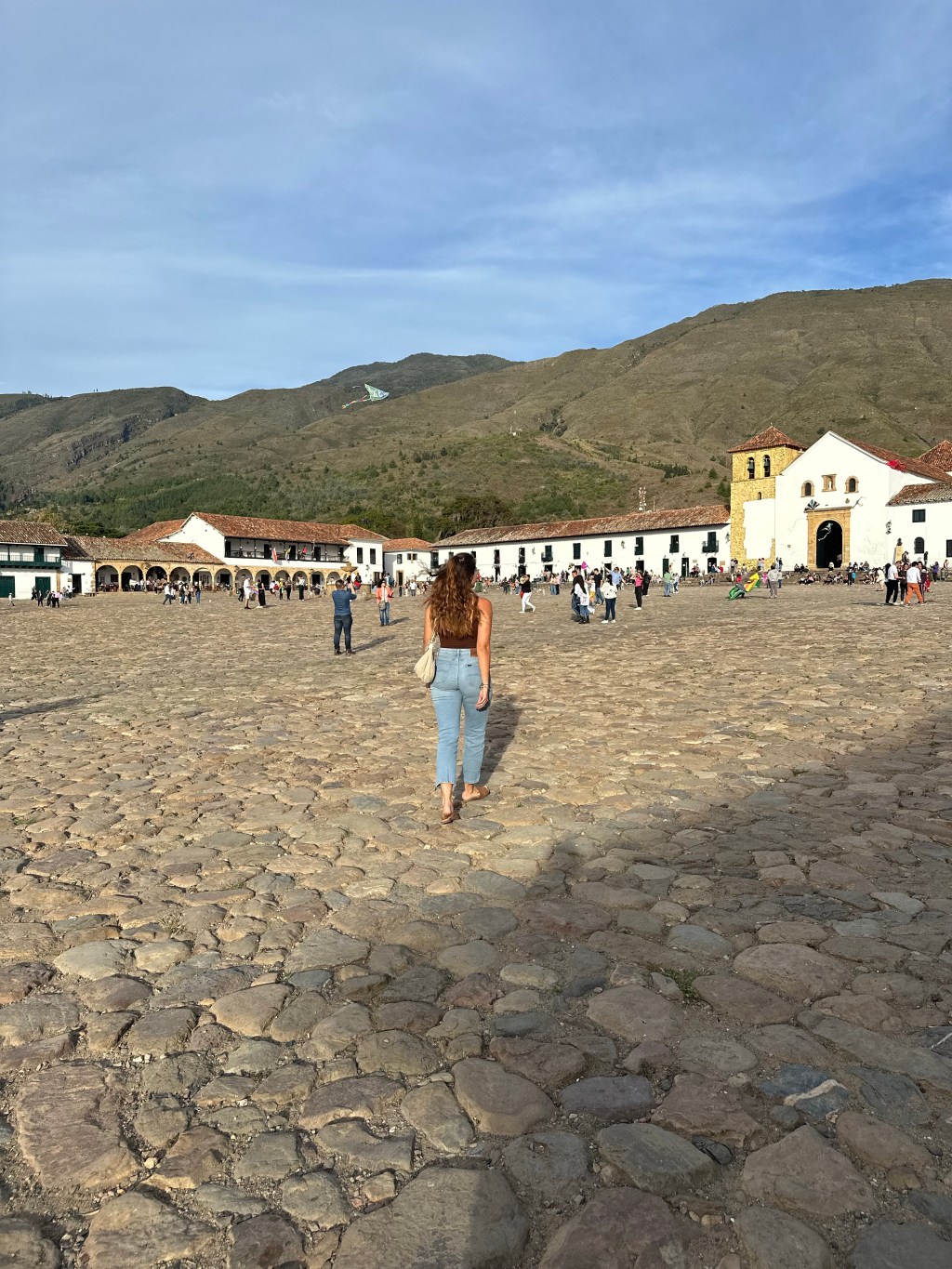
During my brief stay in Villa de Leyva, a town nestled between two mountains with its charming cobblestone streets, I found myself yearning for more than the three nights I spent there. What struck me most about this place was its unassuming authenticity—often overlooked by mainstream tourists, it provided a break from the typical traveler crowds.
The town center gives a historical vibe and offers beautiful sunsets when accompanied with a nice glass of locally grown wine. Yet, Villa de Leyva isn’t just about tranquility; it’s a thriving hub for various adrenaline activities that inject an unexpected thrill into the laid-back atmosphere.
Things to Do
This is not a common city that people talk about when coming to Colombia despite the numerous things to do and see. In the three nights I spent here, I prioritized adrenaline rushes, tranquility, all while relishing the renowned wine tours that make this destination unique in Colombia. This is the primary region where the majority of the country’s wine is cultivated, making it a must-visit place. Here are my top 3 things to do:
1. Drink Wine at Winery Villa de Marques
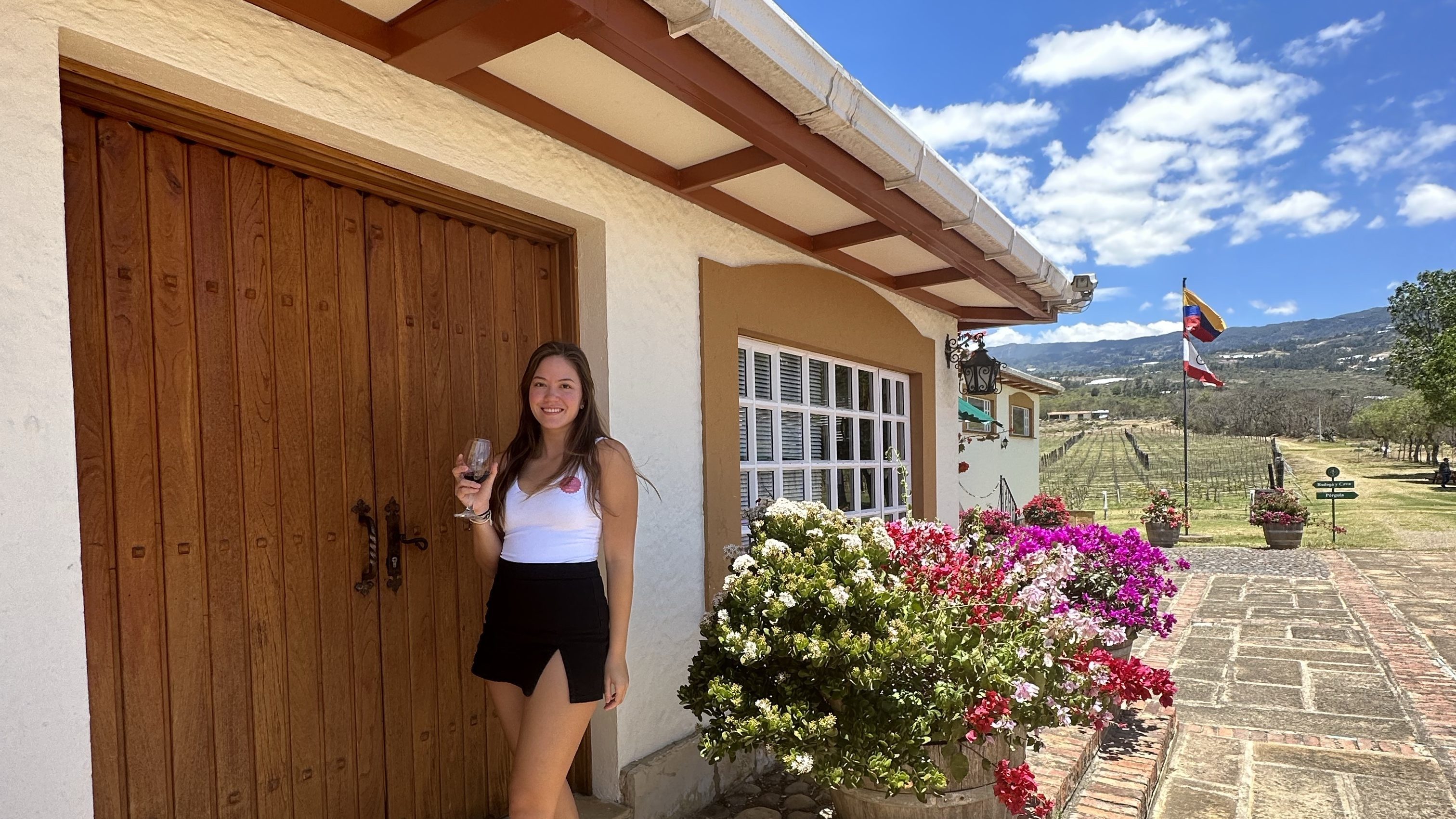
Boyacá stands out as one of the few regions producing wine, and I sampled a few varieties. There is room for improvement so I would not recommend if you are a wine connoisseur. A visit to Villa de Leyva, where the wine originates, offers an insightful tour of the entire process. Ensure to secure your spot by booking online in advance due to high demand.
- Where: Villa de Marques
- Duration: 1- 2 hours
- Price: 45,000 COP (11 USD) per person
2. Rappelling Hoyo de la Romera
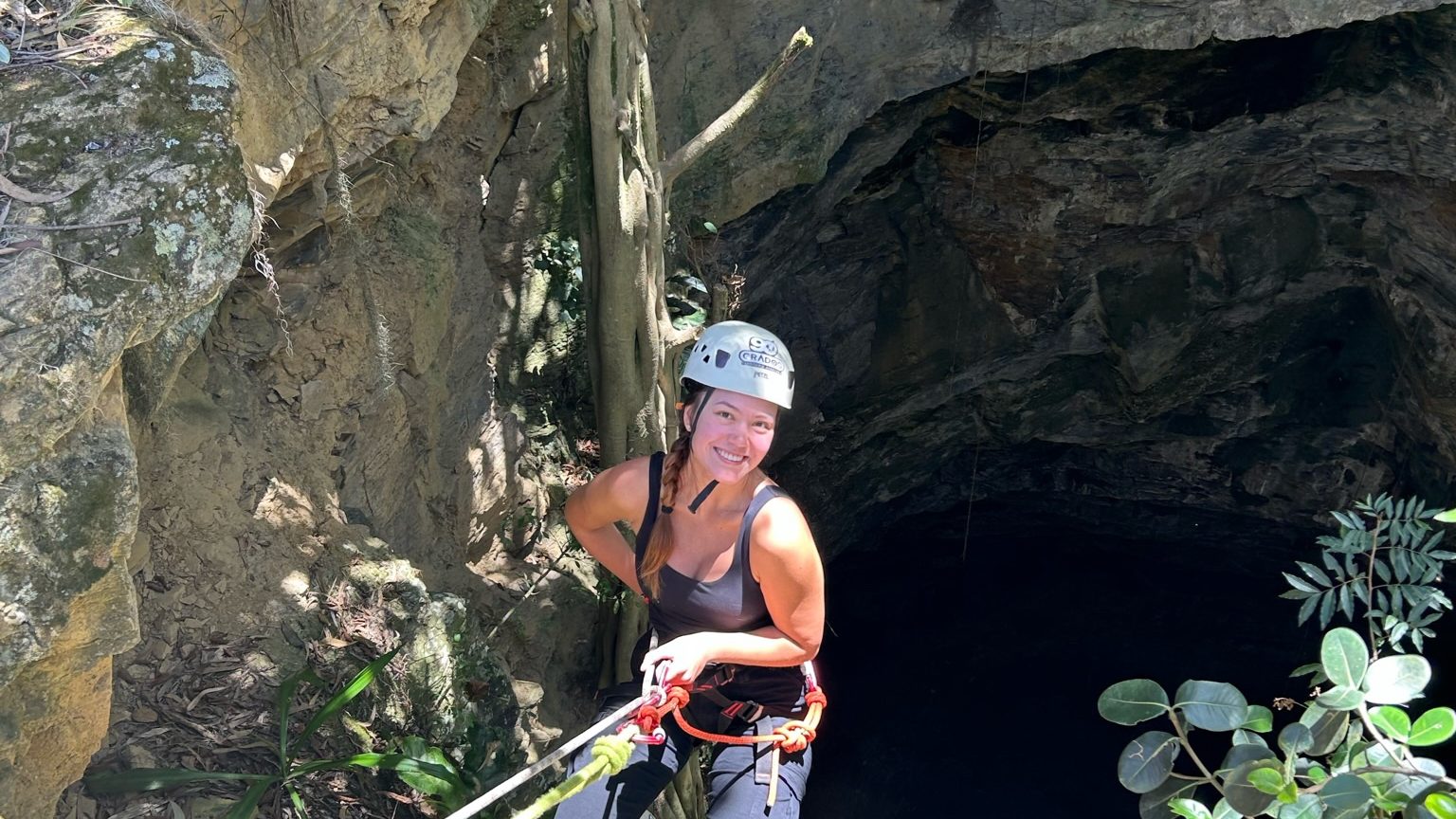
Hoyo de la Romera is a remarkable deep pit that requires a 130-ft rappel for exploration. Surprisingly, ascending proved tougher than the descent. As an inexperienced climber, navigating up the cave was quite challenging. Expect to rely heavily on your guide for assistance; THANK GOD I had a harness.
- Where: Santa Sofia
- Duration: 4-6 hours
- Price: 200,000 COP (50 USD) for a Spanish Guide) OR 250,000 COP (62 USD) for an English Guide
3. Swim in the Hot Springs of Los Termales
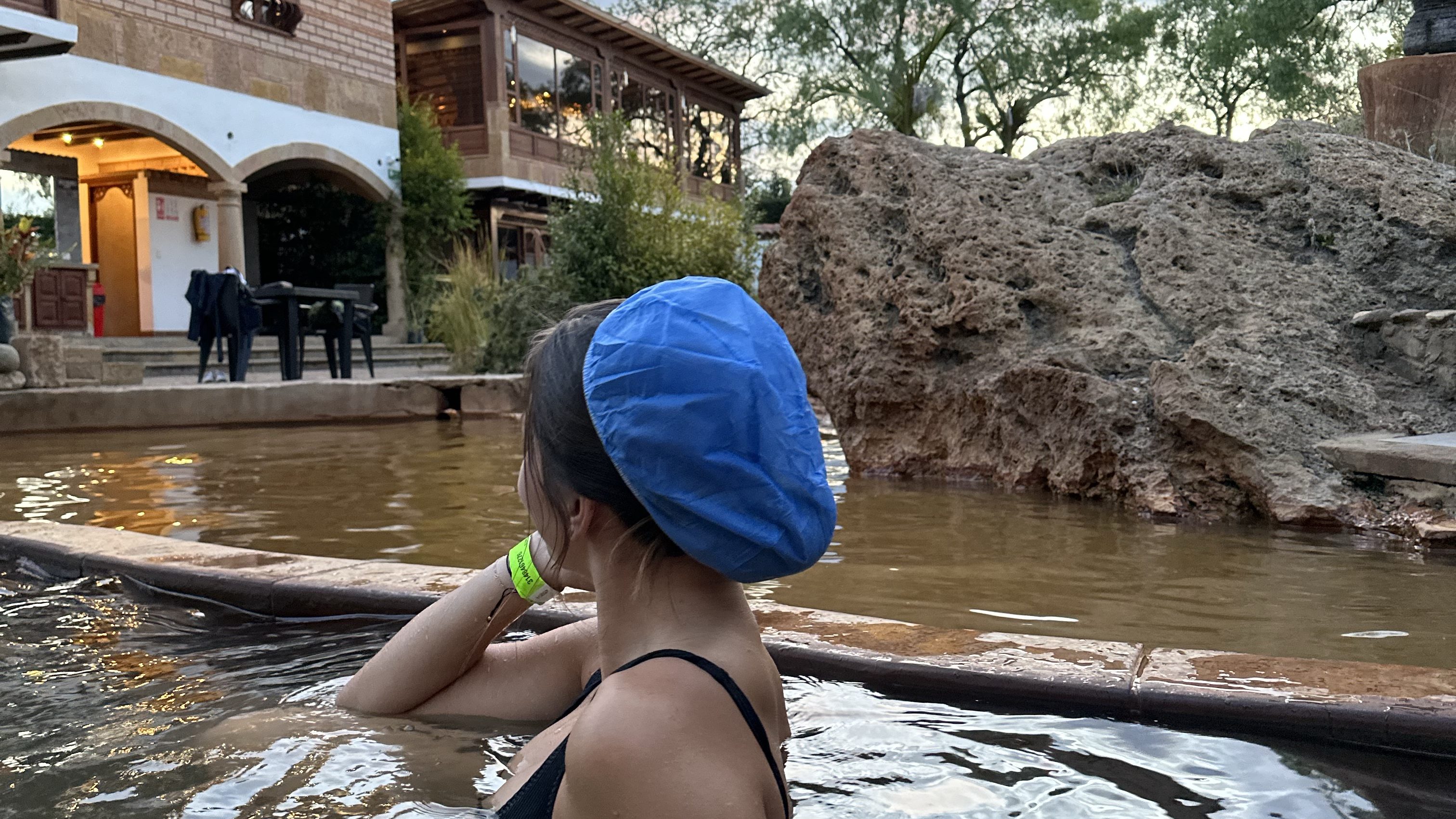
Los Termales comprises open-air warm springs located a short distance from town. The atmosphere is remarkably serene, allowing you to relax in the warm water. Attendants offer a variety of food and drinks, enhancing the experience. I visited toward the day’s end and relished a magnificent stargazing session.
- Where: Los Termales
- Duration: 2-3 hours
- Price: 25,000 COP (6 USD)
More Things to Do
Visit Casa Terracota
Casa Terracota is an architectural marvel that transforms baked earth into a monumental clay house, incorporating earth, air, water, and fire – the fundamental elements – into its construction. A Spanish-speaking guide is available, but you can access additional information in English by scanning QR codes provided on-site.
Wander Plaza Mayor
Numerous dining and drinking spots encircle the charming cobblestone town center. It’s an ideal area for leisurely strolls and exploration. I’d suggest savoring a sunrise coffee or enjoying a glass of wine or Aguila beer during the sunset—a delightful experience in this locale.
Explore the Saturday Market
Each Saturday, a bustling market unfolds, offering fruits, clothing, and delicious street food from 5 am to 4 pm. Our guide from Hoyo de la Romera introduced us to this vibrant experience, allowing us to delve into the local cuisine and discover a variety of indigenous fruits.
Visit Museo Paleontológico
The Museo Paleontológico is a compact yet fascinating museum showcasing well-preserved fossils alongside brief explanations. About 50 million years ago, Villa De Leyva was underwater, making the area a haven for paleontologists due to its rich fossil discoveries and remnants from that ancient oceanic period.
Travel Costs
Suggested Budgets
- Low Budgeting (Approx. 100,000 COP (25 USD) per day):
- Hostel dorm accommodation
- Cooking some meals and opting for inexpensive street food
- Limited alcoholic beverages
- Engaging in free or low-cost activities
- Mid-Range Budgeting (Approx. 175,000 COP (45 USD) per day):
- Private AirBNB or hostel room
- Dining out for all meals
- Enjoying more paid activities such as paragliding, rafting, or tubing.
Accommodation
In Villa de Leyva, hostel dorm rooms typically range from 25,000 to 40,000 COP (6 to 10 USD) per night. While a private room or AirBNBs averages between 35,000 and 80,000 COP (9 to 20 USD). Budget hotels are also available at around 100,000 COP (25 USD) per night.
Food
Colombian cuisine, a fusion of indigenous, Spanish, and Afro-Caribbean influences, primarily features staples like rice, beans, plantains, and a variety of meats. Almost every meal will also be accompanied by a delicious juice. Notably, it’s not only delicious but also budget-friendly, making it a delightful culinary experience for any traveler.
- Local eateries serve meals starting from 12,500 COP (3 USD).
- Western restaurants charge approximately 30,000 COP (7.5 USD) for a main dish.
- Vegetarian and even vegan options are available at similar prices of around 25,000 COP (6 USD).
Groceries
Shopping for groceries is incredibly affordable, averaging about 80,000 COP per week for essential staples. Most hostels provide kitchen facilities, allowing you to prepare your own meals and further lower your food expenses.
Beverages
At bars, a beer can range from 10,000 to 15,000 COP (2.5 to 4 USD), while cocktails or glasses of wine are typically around 30,000 COP (7.5 USD).
When to Go
Villa de Leyva maintains a relatively stable climate due to its location between two mountain ranges. Temperatures hover around 65°F, offering a slightly chilly atmosphere. This city is not a tourist area, so you don’t need to consider the crowds are social opportunities.
Travel Tips
- Local Cuisine: Save money by indulging in local dishes rather than opting for western food.
- Ground Transportation: Utilize the RedBus app for intercity travel, and don’t hesitate to seek advice from locals or hostels. Given the town’s small size, Uber options are limited; Taxis are the main mode of transport if walking isn’t preferred.
- Water Bottle: Unless you’re explicitly informed that the water is safe, assume it’s not potable. Carry a reusable water bottle with a built-in filter. While tap water is generally safe in cities, but in smaller towns and beach areas, it’s advisable to avoid it. Personally, I prefer using the LifeStraw Filter bottle for its reliable filtration capabilities.
- Basic Spanish: Basic Spanish is incredibly beneficial. In this less touristy area, English isn’t commonly spoken, even by hostel hosts. Language-learning apps like Duolingo can assist in overcoming the language barrier, considering only a small percentage (3%) of the native population speaks English.
- ATM Tips: Look for a Davivienda (red ATM), which often provides a more comfortable experience. When prompted about foreign transaction fees, select ‘no’ to potentially avoid additional charges. If a Davivienda isn’t available, try clicking ‘no’ anyway, as it may work in your favor.
How to get to Bogotá
Opt for redBus to facilitate your intercity travels. There are not any nearby airports available for flight travel within this area.
- Bogotá: 4-5 hours by bus
- San Gil: 5-6 hours by bus (take a bus to Tunja and another bus to Villa de Leyva)
Hostel Recommendations
Hostel Once Once (Villa de Leyva): Situated within a family-operated establishment, this accommodation offered an excellent location for exploring the surroundings. Just a 5-minute walk from the town center, the hosts, although not fluent in English, were incredibly accommodating. They efficiently arranged tours and provided recommendations for activities, showcasing their helpfulness despite the language barrier.
Staying Safe
Smaller cities like Villa de Leyva are considered safer than the larger cities such as Bogotá and Medellín. I would still be careful, but I never felt unsafe in this area.
- Exercise Caution: While Colombia is generally safe, exercising caution is essential. Petty crimes, especially at night, can occur.
- Valuables: Conceal your valuables and avoid wandering in unfamiliar areas after dark. Don’t wear flashy jewelry or have your phone out on the streets.
- ATM Safety: When using ATMs, opt for ones with closed doors and locks. Consider using Davivenda for added security. They offer air conditioning, doors with locks, and no ATM fees.
- Backpack Security: Keep your backpack on your lap or securely fastened to your foot or chair to deter theft. Many people to choose to where the backpacks in front when traveling for added protection.
- Trust Your Instincts: In emergencies, dial 123 for assistance.
- Drinking Safety: Refrain from accepting drinks from strangers, regardless of gender. Purchase your own to maintain control. This practice is particularly important for women, as cultural norms may lead to unsolicited offers.
- Transportation Caution: I solely relied on taxis arranged by tour guides or our hostel hosts. Uber and local transportation options are limited in this area.



Leave a Reply